
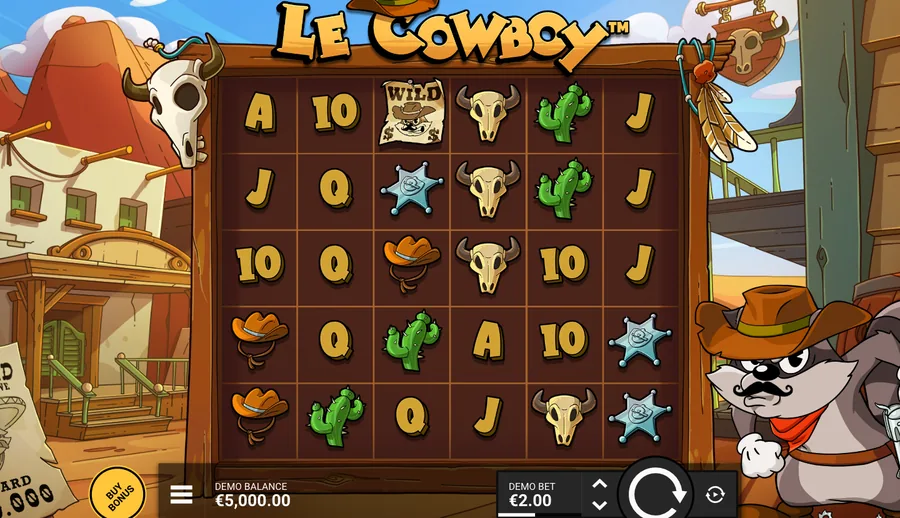
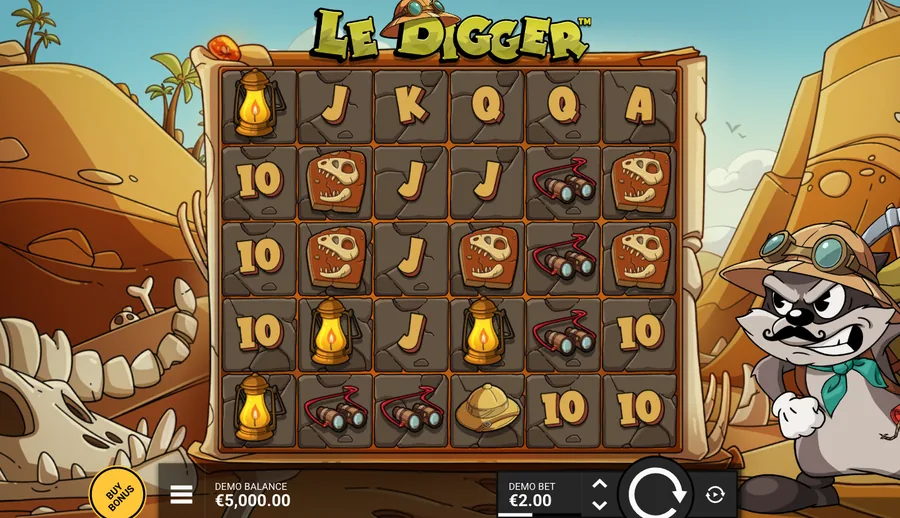
Most Published Figures: Le Cowboy and Le Digger
Why Le Cowboy and Le Digger Rank Here
Thirteen return figures each, because the gamble fork splits several of them, while no other Le title prints more than nine
 Gambling carries financial risk; availability depends on your jurisdiction. Please play responsibly: responsible gambling help.
Independently tested in the free demo
In short: Le Cowboy is the Le series title that comes closest to winning our ranking of all seventeen: it prints thirteen published return figures, tied with Le Digger, and carries a 25,000x ceiling that no other Le game matches. No single title takes all four criteria.
Seventeen games, one studio, and a surprising amount of published data to rank them on. We used Hacksaw's own figures, recorded across 5 and , rather than impressions from play.
Thirteen return figures each, because the gamble fork splits several of them, while no other Le title prints more than nine
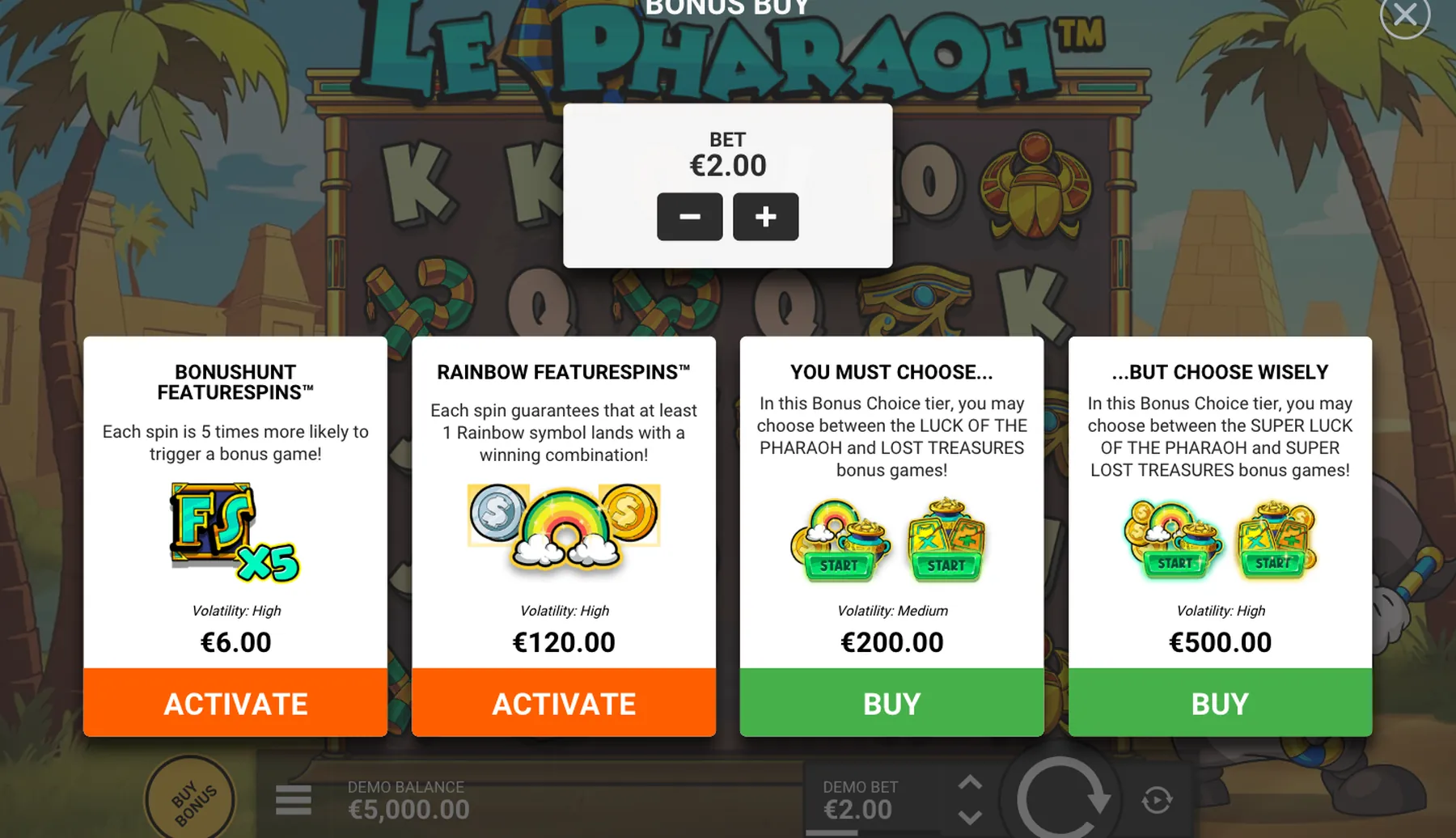
Nine figures covering every option the bonus menu offers, so the cost of the choice itself is visible beforehand; the fifth round, awarded by five scatters, carries no figure
25,000x the bet, confirmed in both the rules screen and the studio feed, against 20,000x on its nearest competitors
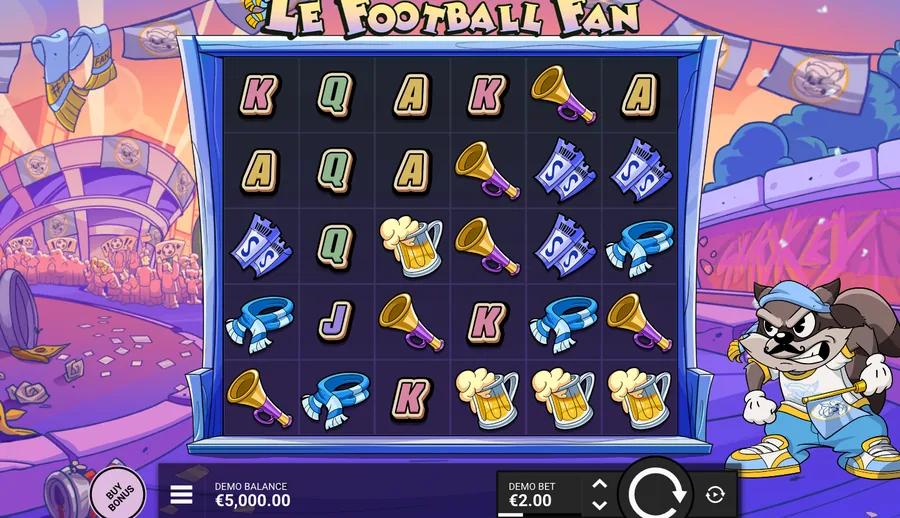
96.41%, the strongest default percentage of the seventeen, although it comes paired with the joint-lowest ceiling at 2,500x
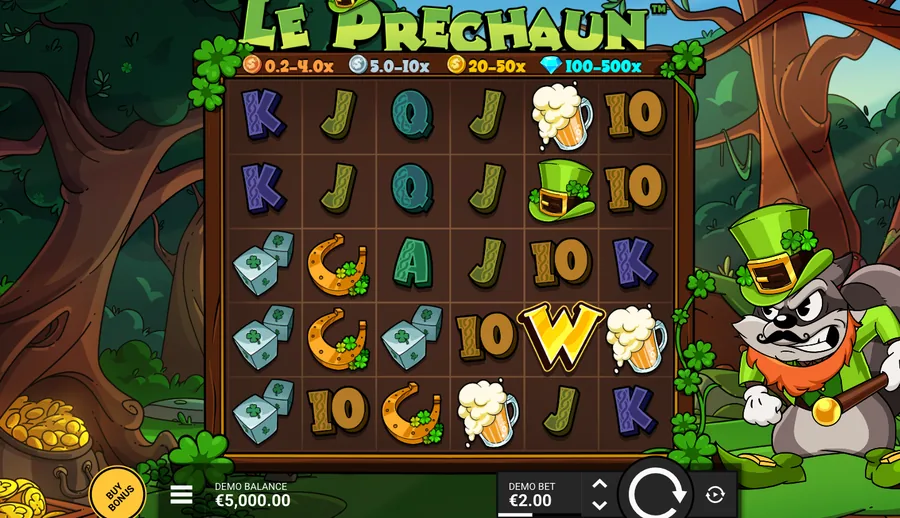
Five licensed builds from 97.52% down to 86.31%, which makes the casino's configuration matter more than the game's
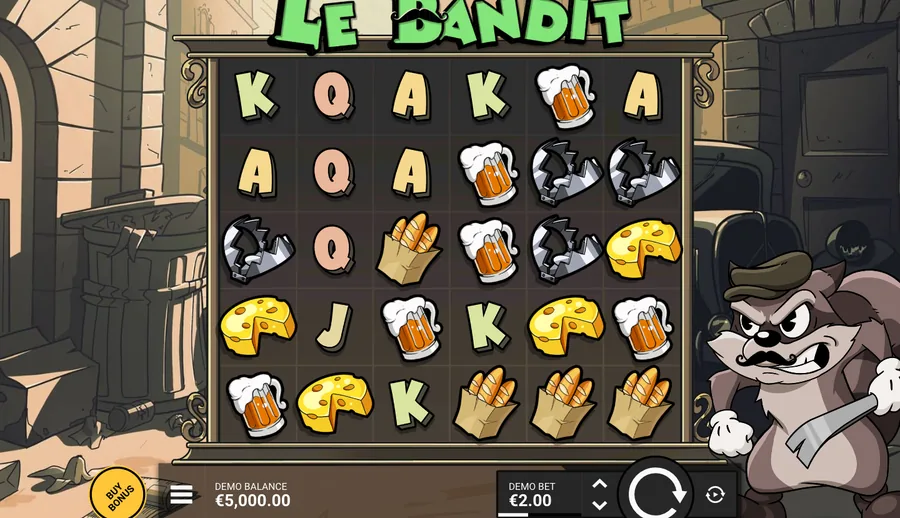
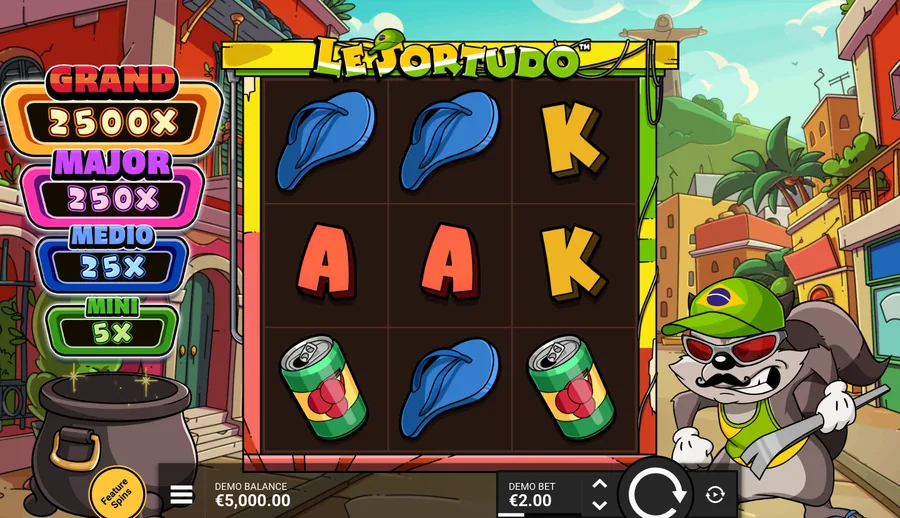
The only two 3x3 Hold and Win titles in a catalogue of 6x5 grids, on nine paylines rather than clusters, and they print identical figures
Both put four of their thirteen figures on the base game and a bonus won from it, which no other title in the series does
| Game | Default return | Ceiling | Stake range | Published return figures |
|---|---|---|---|---|
| Le Football Fan | 96.41% | 2,500x | €0.10–€400 | 5 |
| Le Vampire | 96.36% | 15,000x | €0.05–€50 | 6 |
| Le Bandit | 96.34% | 10,000x | €0.10–€100 | 5 |
| Le Hooligan | 96.34% | 10,000x | €0.10–€100 | 5 |
| Le Clubber | 96.34% | 10,000x | €0.10–€100 | 5 |
| Le Fisherman | 96.33% | 15,000x | €0.10–€50 | 6 |
| Le Viking | 96.32% | 10,000x | €0.10–€100 | 5 |
| Le Cowboy | 96.28% | 25,000x | €0.05–€40 | 13 |
| Le Prechaun | 96.28% | 15,000x | €0.05–€50 | 6 |
| Le Sortudo | 96.27% | 2,500x | €0.05–€400 | 3 |
| Le Bandit Hold & Win | 96.27% | 2,500x | €0.05–€400 | 3 |
| Le Digger | 96.26% | 15,000x | €0.05–€50 | 13 |
| Le Zeus | 96.26% | 20,000x | €0.10–€50 | 5 |
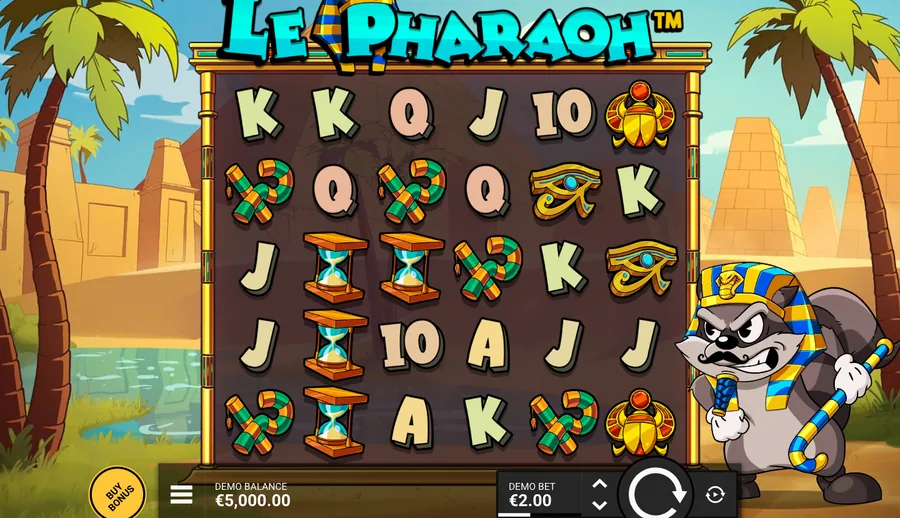
| Le Pharaoh | 96.21% | 15,000x | €0.10–€50 | 9 |
| Le King | 96.14% | 20,000x | €0.10–€50 | 5 |
| Le Santa | 96.14% | 20,000x | €0.10–€50 | 5 |
| Le Bunny | 96.14% | 20,000x | €0.10–€50 | 5 |
Every figure in the table comes from Hacksaw itself, either from the RGS feed or from the rules screen inside each demonstration client. Our impressions of how a game plays stay out of it. The method is deliberately mechanical and completely reproducible.
Put plainly, each number here was printed by the company that manufactures the game, in documentation anyone can open. Nothing in the table was inferred, averaged or borrowed from a third-party catalogue that might have transcribed it incorrectly.
That choice has a consequence worth stating. A game can rank well here and still feel dull, because transparent disclosure and an entertaining session are fundamentally different qualities.
If you care more about the session than the arithmetic, read the ranking as a map of what each game tells you, then open its demo and judge the atmosphere yourself. The ranking is a starting point, nothing more authoritative.
Eight of the seventeen titles share numbers with another game, which matters considerably, and seven of them share every published figure. Le Hooligan and Le Clubber print one identical scorecard. Le King, Le Santa and Le Bunny print a second scorecard, and Le Sortudo and Le Bandit Hold & Win print a third between them.
Le Bandit sits beside the first group rather than inside it. The difference is a single additional build. The game matches Le Hooligan and Le Clubber on default return, ceiling and stake range, then publishes a fourth build at 88.36% that neither of the other two offers, and a build list is a published figure like any other.
When two games print identical figures, the numbers give you nothing to choose on, and neither do the mechanics. Personal preference decides, nothing mathematical. Le King, Le Santa and Le Bunny print the same jackpot at the same four values, and only its name changes between Markers, Boxes and Eggs, following each game's illustrations.
Return and ceiling also pull apart, sometimes dramatically. Le Football Fan returns 96.41% and caps at 2,500x, whereas Le Cowboy returns 96.28% and caps at 25,000x. Le King, Le Santa and Le Bunny show the same trade in identical terms, because they pair the joint-lowest 96.14% with a 20,000x cap.
Now count. Published return figures per title run from three to thirteen, and the difference is considerable. If you want the most information per game, that count is the number to watch.
Le Sortudo and Le Bandit Hold & Win publish three each, covering the base game and both their entrances. Le Cowboy and Le Digger publish thirteen, because a gamble step inside a bonus carries its own individual figure.
One game tells you three things. Another tells you thirteen, from the same studio on the same engine.
Where a studio splits a return by what you do inside the round, as Le Digger and Le Cowboy do, a reader can calculate the cost of the decision itself. That's why we weighted disclosure at 40% rather than treating it as a footnote. Disclosure has measurable, practical value.
Volatility is published twice, and neither reading ranks. The studio's own game meter reads the same on sixteen of the seventeen titles, while the labels on individual cards are applied inconsistently. Release dates exist officially for six titles, come from third-party catalogues for ten more and are missing entirely for Le Bandit Hold & Win.
A ranking built on disclosure rewards paperwork, and we'd rather acknowledge that openly. Le Cowboy and Le Digger collect two awards partly because they print more lines, and a reader who never touches the gamble fork gains little from the additional figures. If that's you, ignore those two awards.
Every return in the table is also the default configuration. Suppose your casino licensed Le Prechaun at 86.31%: the 96.28% in our table would then overstate what you play by 9.97 percentage points.
Ties stay ties as well, and there are three groups of them. Seven titles can't be separated on published figures at all, so within each group the order in the table carries no meaning.
Two subjects sit outside this ranking, and both have their own dedicated pages: how the studio arrives at its figures, and the demo route that lets you open the same rules screen we did and verify every number here independently.
Deposits and identity checks stay on the operator's own secure site.
More on this game, from the same section first:
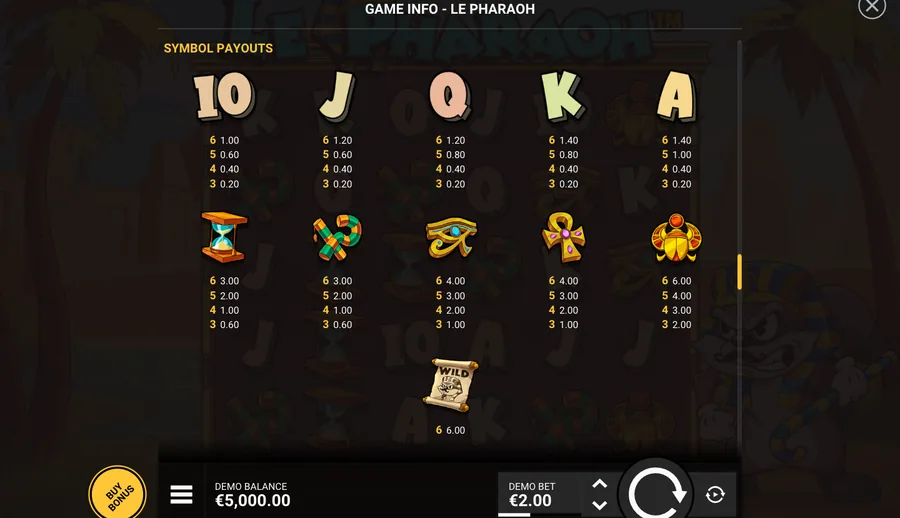
Eight licences, company C84111, Malta
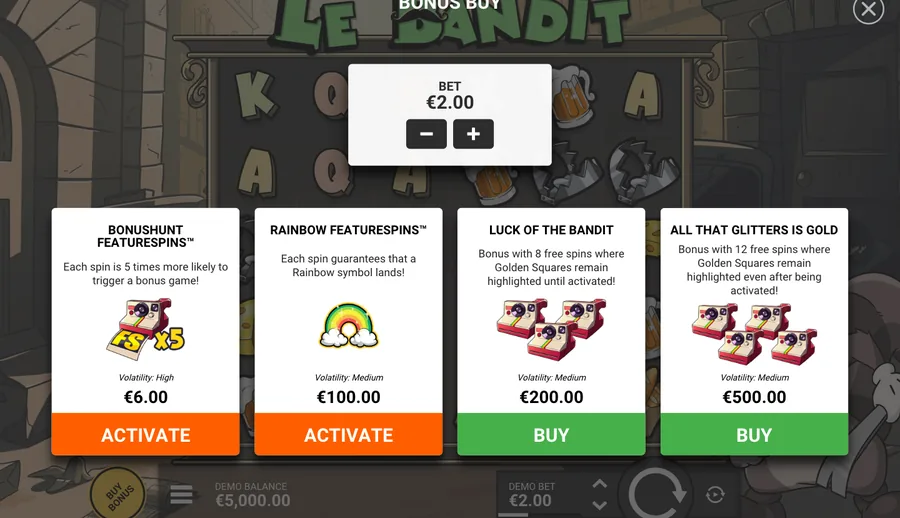
96.34% default, 10,000x cap, €6 entry
Eight steps, €5,000 play balance

Nine RTPs, 96.18%–96.35%, 15,000x cap
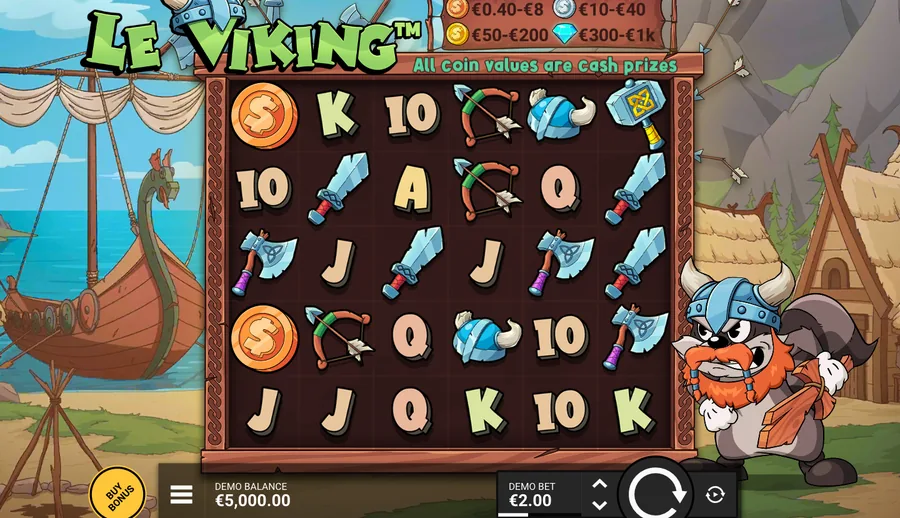
15,625 ways, 96.32% base, €100 top stake
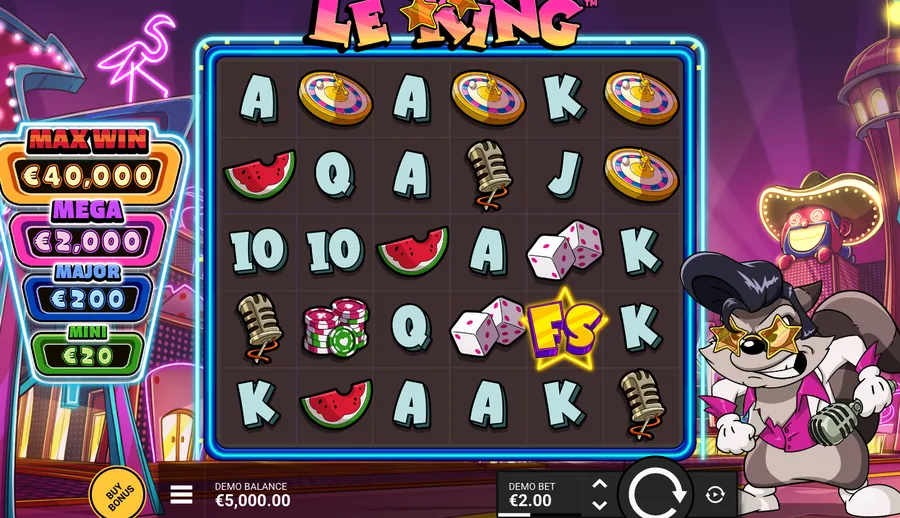
96.14% base, 96.36% on the top buy
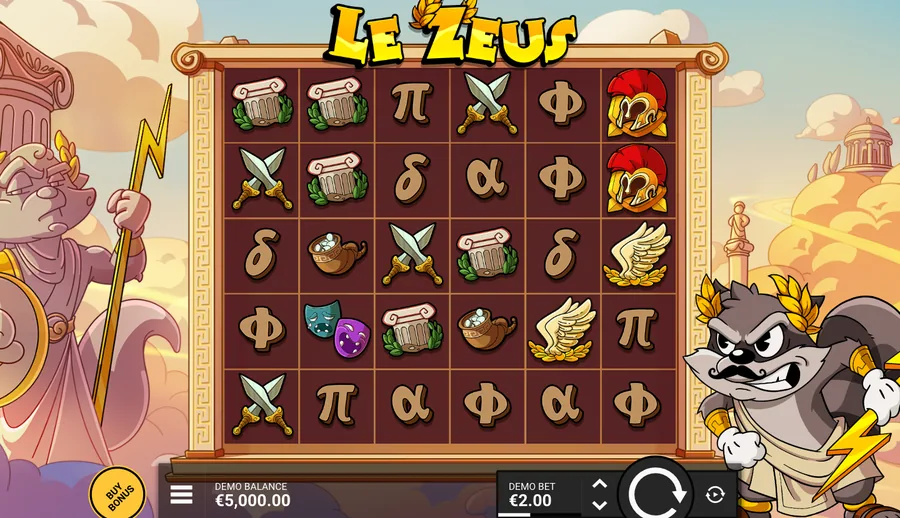
19 fixed lines, 96.26% base, 20,000x
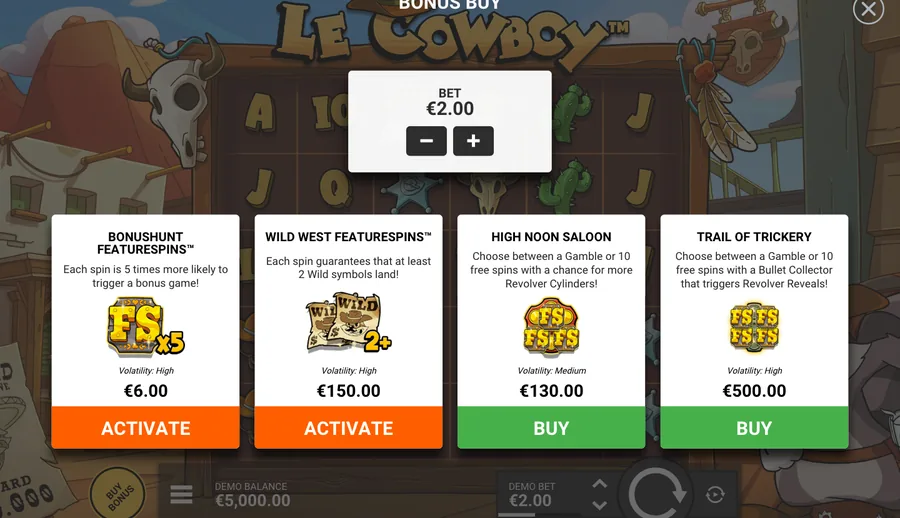
25,000x cap, highest in the Le series
Questions on this list tend to be about method: what we ranked on, where the figures came from, and why a popular title might sit lower than expected.
Le Cowboy or Le Digger. Each prints thirteen separate return figures, with the gamble fork inside a round splitting several of them in three.
No. Every criterion comes from a studio source, because a demo run of any length can't measure a theoretical return, however many spins it covers.
Yes. Seven of the seventeen print identical numbers, in groups of two, three and two, so the published figures can't separate them.
We queried the studio feed for every game id, then opened each demo and copied its rules screen, recording both across two consecutive days.